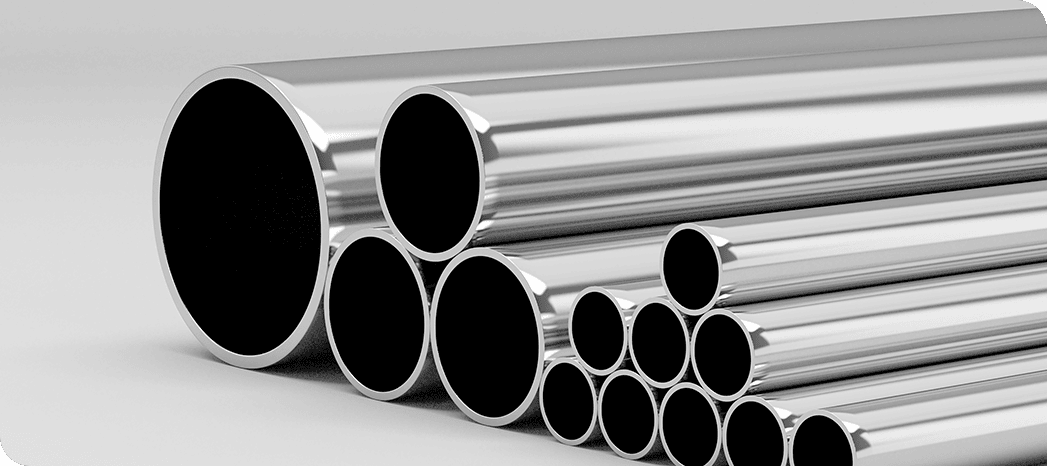
In the intricate network of instrument tubing in chemical plants, the failure of a single section of precision ferrule tubing can bring an entire control system to a halt. Behind these seemingly ordinary metal tubes is a precise standards system safeguarding industrial safety. ASTM A269 is a core technical specification within this system. It defines the manufacturing and inspection benchmarks for precision ferrule tubing and serves as an indispensable technical foundation in instrument systems, hydraulic control, and high-purity gas delivery.
01 Standard Positioning: What Is ASTM A269?
ASTM A269 is a standard specification developed by ASTM International, officially titled Standard Specification for Seamless and Welded Austenitic Stainless Steel Tubing for General Service. This standard primarily covers austenitic stainless steel tubing manufactured by seamless and welded processes, and is specifically designed for general corrosion-resisting and low- or high-temperature service applications.
Compared with the commonly used ASTM A312 standard, which is primarily intended for pressure piping in high-temperature and general corrosive service, A269 has clearly different application scenarios:
| Comparison Dimension | ASTM A269 | ASTM A312 |
|---|---|---|
| Core Positioning | Instrument lines, hydraulic systems | Chemical and petroleum transmission pipelines |
| Primary Focus | Dimensional accuracy and consistency | Conveying function and pressure-bearing capacity |
| Typical Applications | Control systems, precision instruments | Process piping, transmission networks |
| Size Range | Internal diameter of 1/8 inch and above | Larger diameters |
The root of this difference lies in the application scenarios: instrument systems are extremely sensitive to tubing assembly dimensions, while transmission pipelines place greater emphasis on pressure-bearing capacity and corrosion resistance. The A269 standard was created precisely to meet the needs of precision control.
02 Material Requirements: Chemical Composition and Mechanical Properties
The ASTM A269 standard covers multiple grades of austenitic stainless steel, the most common of which include the 304/304L and 316/316L series. The chemical composition requirements for the same material grades are basically consistent under A269 and A312.
Mechanical Property Requirements
Taking cold-drawn 1/8-hard 316/316L stainless steel ferrule tubing as an example, the A269 standard specifies:
- Yield strength (0.2% offset): 75 to 110 ksi
- Tensile strength: 105 to 140 ksi
- Elongation: minimum 20% (2-inch gauge length)
Hardness Control
For ferrule tubing applications, hardness is an extremely critical indicator. The A269 standard requires ferrule tubing to have a maximum hardness of 90 HRB (some materials, such as S31254, require a maximum of 96 HRB).
Important Note: In ferrule fitting systems, the hardness of the tubing should be lower than that of the fitting body, so that during installation the fitting ferrule can “bite into” the tube wall and form an effective seal.
03 Dimensional Tolerances: The Core Expression of Precision Manufacturing
The “precision” of precision ferrule tubing is first reflected in dimensional control. The A269 standard sets strict requirements for dimensional tolerances.
Outer Diameter Tolerance Requirements
The A269 standard specifies that the outer diameter tolerance of precision ferrule tubing shall not exceed ±0.005 in. (±0.13 mm). Some high-end manufacturers can even achieve tighter tolerances of ±0.05 mm.
Wall Thickness and Inner Surface
- Wall thickness tolerance: can be within ±0.05 mm of nominal wall thickness
- Inner surface roughness: BA (bright annealed) tubing can achieve Ra≤0.4 μm, and certain special processes can achieve Ra 0.25–0.3 μm
These strict tolerance requirements ensure sealing reliability when the tubing is connected with ferrule fittings, while also guaranteeing stable and clean fluid delivery.
04 Inspection System: Multi-Dimensional Quality Assurance
The A269 standard establishes a comprehensive inspection system to ensure that every tube meets quality requirements:
Mechanical Property Testing
| Test Item | Purpose |
|---|---|
| Flaring test | To verify the expandability of the tubing |
| Flange test | To assess edge deformation capability |
| Reverse flattening test | Special inspection for welded tubing |
| Hardness test | To verify material consistency |
Nondestructive Testing
The standard requires that each tube must undergo nondestructive electric testing or hydrostatic testing, providing dual assurance for product quality.
Dimensional and Surface Inspection
For high-purity applications, strict cleanliness control and surface quality inspection are also required. Some manufacturers use processes such as ultrasonic cleaning and eddy current testing to ensure tubing cleanliness.
05 BA Tube Process: The Ideal Form of A269 Precision Tubing
Within the framework of the A269 standard, BA tubing (Bright Annealed Tube) represents the highest level of manufacturing technology for precision ferrule tubing.
Definition of BA Tubing
BA tubing refers to precision stainless steel tubing that has undergone bright annealing. It is heat treated under the protection of a reducing atmosphere, so the tube surface does not come into contact with oxygen and no oxide scale is formed, resulting in highly smooth and clean inner and outer surfaces.
Key Manufacturing Process Points
- Forming: mainly multi-roll cold rolling, with dimensional accuracy up to 0.2%
- Heat treatment: bright solution treatment (annealing) under the protection of a reducing atmosphere
- Cleaning: ultrasonic cleaning, degreasing, and oil removal
- Inspection: eddy current testing, hydrostatic testing, etc.
Advantages of BA Tubing
- Excellent surface finish (Ra≤0.4 μm)
- No oxide scale on inner or outer walls
- High dimensional accuracy (tolerance ±0.05 mm)
- Cleanliness meeting the requirements of high-purity gas delivery
06 Working Pressure Calculation and Selection Recommendations
Pressure Rating
According to ASME B31.3 and B31.1, for ASTM A269 ferrule tubing under conditions of -28 to 37°C (-20 to 100°F), 137.8 MPa (20,000 psi) is used as the S value to calculate allowable working pressure.
Wall Thickness Selection Reference
| Outer Diameter | Wall Thickness | Working Pressure |
|---|---|---|
| 6 mm | 1.0 mm | 430 bar |
| 10 mm | 1.0 mm | 330 bar |
| 12 mm | 1.5 mm | 450 bar |
Note: When used for gas media, thick-wall tubing is recommended to improve connection reliability.
High-Temperature Correction
Under high-temperature operating conditions, the pressure rating must be multiplied by the temperature correction factor:
| Temperature (°C) | 316/316L Correction Factor |
|---|---|
| 93 | 1.00 |
| 204 | 0.96 |
| 315 | 0.85 |
| 426 | 0.79 |
Key Selection Points
- Material matching: the hardness of the tubing should be lower than that of the fitting
- Wall thickness first: thick-wall tubing is preferred for gas systems; thin-wall tubing may collapse during ferrule installation
- Surface condition: BA-grade or EP-grade (electropolished) tubing must be used for high-purity applications
- Standard confirmation: ensure that the tubing meets A269 requirements for dimensional tolerance, hardness, and cleanliness
07 Application Fields and Industry Value
ASTM A269 precision ferrule tubing is widely used in the following fields:
- Semiconductor and Electronics: high-purity gas delivery, cleanroom facilities
- Petrochemical: instrument control systems, analytical instrument tubing
- Biopharmaceutical: WFI systems, clean process piping
- Aerospace: hydraulic systems, fuel lines
- Laboratory and Research: high-purity gas distribution, analytical instruments
- Food and Beverage: clean media transfer
In these applications, the dimensional accuracy, surface cleanliness, and mechanical properties of A269 tubing are directly related to system safety, reliability, and product quality.
Summary
As the technical foundation for precision ferrule tubing, the ASTM A269 standard provides quality assurance for critical applications such as instrument control and high-purity transfer through strict material requirements, precise dimensional tolerances, and a comprehensive testing system. Understanding the core requirements of this standard is of great importance for proper selection and ensuring system reliability.
Whether for material selection by engineers, procurement inspection, or system design, using the A269 standard as the benchmark is a wise choice to ensure the long-term stable operation of precision ferrule tubing systems.